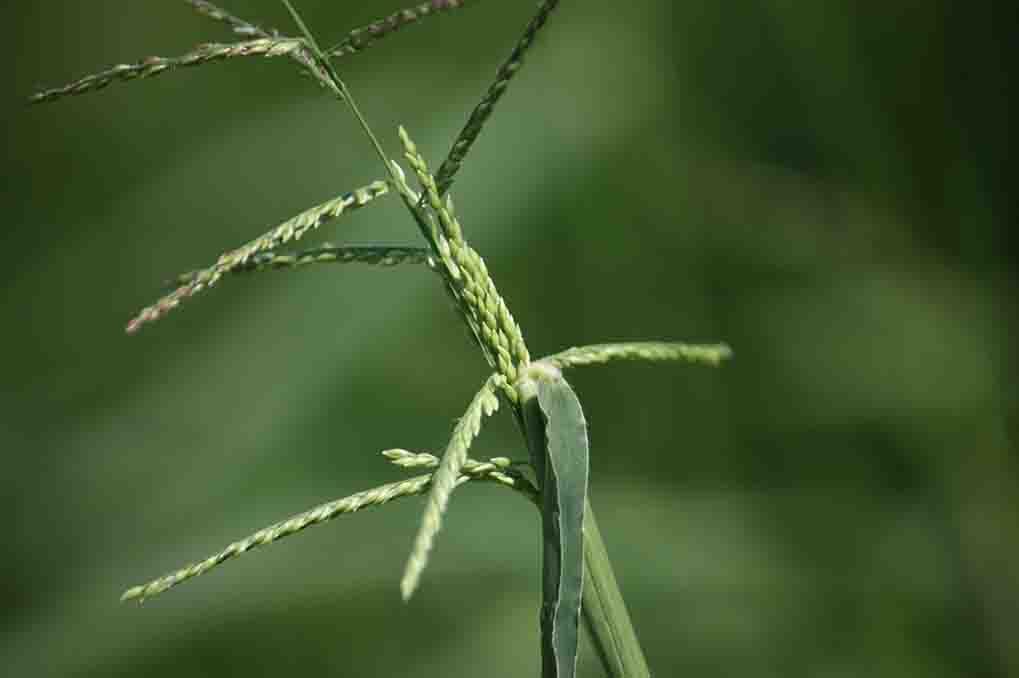
Crabgrass is a warm-season annual grass. It sprouts from seed as soil warms, spreads low across open ground and can leave a fresh crop of seeds behind. The best long-term fix is to understand why it is thriving: thin turf, mowing too short, frequent shallow watering and bare soil give it room to establish.
How to Recognize a Crabgrass Seedhead
Look for a flowering stem with several narrow, finger-like spikes radiating from near its tip. On smooth crabgrass, the branches usually emerge at slightly different points along the stem rather than all from one spot. Large (hairy) crabgrass has a similar form, often with more and longer branches.
- Plants often form flat, spreading patches, especially where turf is thin or soil is exposed.
- Leaves can look lighter green and broader than the surrounding lawn; large crabgrass leaves and sheaths are noticeably hairy.
- Stems touching soil may root at their joints. The flowering stems can resemble bermudagrass or goosegrass, so check the whole plant if identification is uncertain.
Crabgrass can produce seed even when mowed very short, so the mower cannot simply “clip it out.” Preventing seed production and improving the lawn’s density work together.
Mow at the Right Height—Don’t Scalp the Lawn
Mowing at the recommended height for the grass already growing in your lawn supports stronger turf and makes it harder for crabgrass seedlings to establish. For common Sacramento lawns, use the turf type as your guide:
- Tall fescue: 2–3 inches
- Kentucky bluegrass: 1.5–3 inches
- Common or hybrid bermudagrass: 1–2 inches
When grass gets tall between cuts, remove no more than about one-third of the leaf blade at a time. Avoid scalping; short or bare patches allow weed seeds to reach light and open soil. If crabgrass has formed seedheads, bag or collect clippings when practical and clean the mower deck before moving into clean lawn areas so you do not carry seed along.
Water Deeply, Then Give the Soil Time
Frequent, light watering keeps the surface wet and encourages shallow turf roots. UC IPM recommends irrigating deeply—to about 6–8 inches—and less frequently so the lawn can develop deeper roots and better density.
- Water according to soil moisture, weather and your irrigation system instead of running a fixed daily schedule.
- Apply water slowly enough that it soaks in rather than running onto walks or pooling. If runoff starts, pause and let the water absorb, then resume.
- Check penetration with a small soil probe or screwdriver after watering; adjust run time to reach the target depth without creating runoff.
- Fix broken or misdirected sprinkler heads and watch for persistently dry areas that leave turf thin.
Water needs vary with soil, shade, season and grass type. Deep, less frequent irrigation is a general strategy—not a one-size-fits-all schedule.
Natural Ways to Reduce Crabgrass
- Pull young plants by hand while the soil is moist, getting as much of the plant and its rooted joints as practical. Do this before seedheads form; remove pulled plants from the lawn.
- Repair bare and thin spots. Overseed or patch with a turf type suited to the site and season so desirable grass can reclaim open soil.
- Use mulch in beds. A maintained mulch layer blocks light around ornamental plantings. UC IPM notes that depth depends on material: finer mulch may need about 2–3 inches, while coarse mulch may need about 3–6 inches.
- Keep equipment clean after mowing a seed-bearing patch to reduce seed transfer to other parts of the property.
Crabgrass seed can remain viable in soil for years. A consistent routine—correct mowing height, deep and less frequent watering, prompt hand removal and filling bare ground—helps reduce new growth over time.
Source
- UC Statewide Integrated Pest Management Program: Crabgrass — identification, mowing heights, water management and cultural controls.