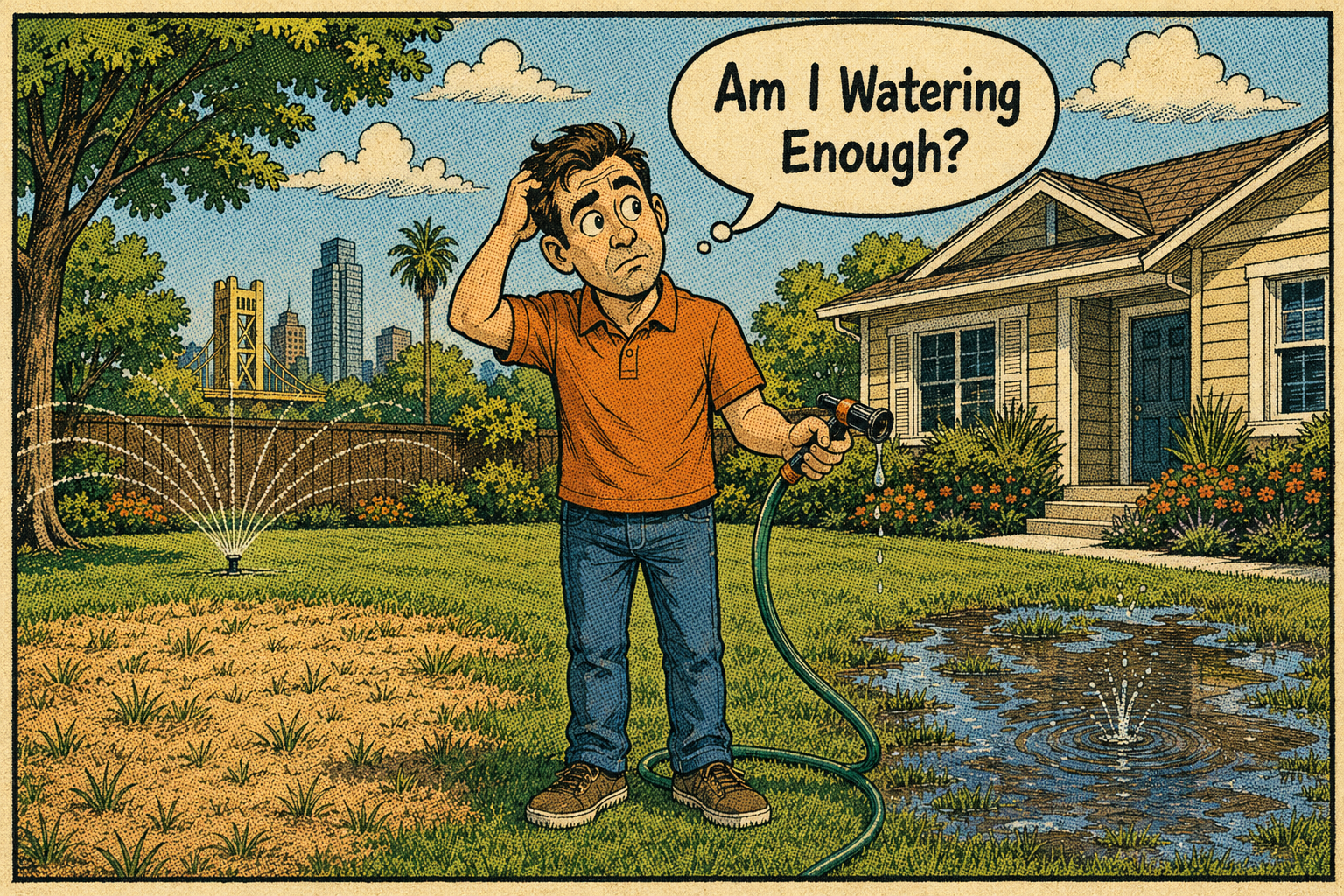
The best watering schedule is not simply “ten minutes every day.” Your grass type, soil, sun exposure, sprinkler output and season all change how much water the lawn actually receives.
A lawn can look dry because it needs water—but it can also develop brown areas because a sprinkler is blocked, the soil is compacted, water is running off a slope or the roots have been kept too shallow by frequent light watering. Before adding more minutes, find out what is happening below the surface.
Start With the Soil
UC Integrated Pest Management recommends letting the top one to two inches of soil partially dry before watering established turf again. When you irrigate, the goal is to moisten the root zone—generally the upper six to eight inches—without creating puddles or runoff.
Push a long screwdriver or soil probe into several areas of the lawn a few hours after watering. It should move through moist soil with moderate resistance. If it stops near the surface, the water may not be penetrating deeply enough. If the ground stays soggy, smells sour or feels saturated long after irrigation, the lawn may be receiving too much water.
Signs the Lawn May Need Water
- The grass develops a dull blue-gray color instead of its normal green.
- Footprints or mower tracks remain visible because the blades do not spring back quickly.
- The upper soil is dry and a screwdriver is difficult to push into the root zone.
- Leaf blades begin folding, curling or wilting during the cooler part of the morning.
Do not rely on color alone. An irrigation defect, disease, pet urine, insects, dull mower blades or scalping can create brown areas that additional water will not correct.
Deep and Infrequent Beats Light and Daily
For established lawns, deep and less-frequent irrigation encourages roots to explore farther into the soil. Repeated shallow sprinkling keeps moisture near the surface, which can produce shallow roots and create conditions that favor certain weeds and diseases.
UC guidance notes that warm-season grasses commonly need fewer watering days than cool-season grasses. Tall fescue and other cool-season turf may need more frequent irrigation during Sacramento heat. That is why a universal schedule is unreliable.
Use “Cycle and Soak” When Water Runs Off
Turn on one irrigation zone and watch it. The moment water begins puddling or moving toward the sidewalk, note the elapsed time. That is approximately the maximum useful run time for one cycle under those conditions.
If the lawn needs more water than the soil can absorb at once, divide the irrigation into two or more shorter cycles with time between them. This allows water to soak in rather than wash away. Repair tilted, broken or mismatched sprinkler heads before extending the timer.
Follow Your Water Provider’s Rules
Sacramento County contains more than 25 water providers, and watering days can differ by provider and address. Sacramento County Water Agency customers should confirm their current assigned days before changing a controller. Rules may also distinguish between lawn sprinklers and drip irrigation.
A Better Weekly Routine
- Check soil moisture before the scheduled watering day.
- Watch each sprinkler zone for blocked heads, misting, overspray and runoff.
- Water early enough to reduce evaporation while following local rules.
- Probe the soil afterward to see how deeply and uniformly the water moved.
- Adjust one variable at a time and observe the lawn before adding more water.
The goal is not to keep the surface constantly wet. It is to supply the root zone with enough moisture, allow some drying between irrigations and avoid wasting water.